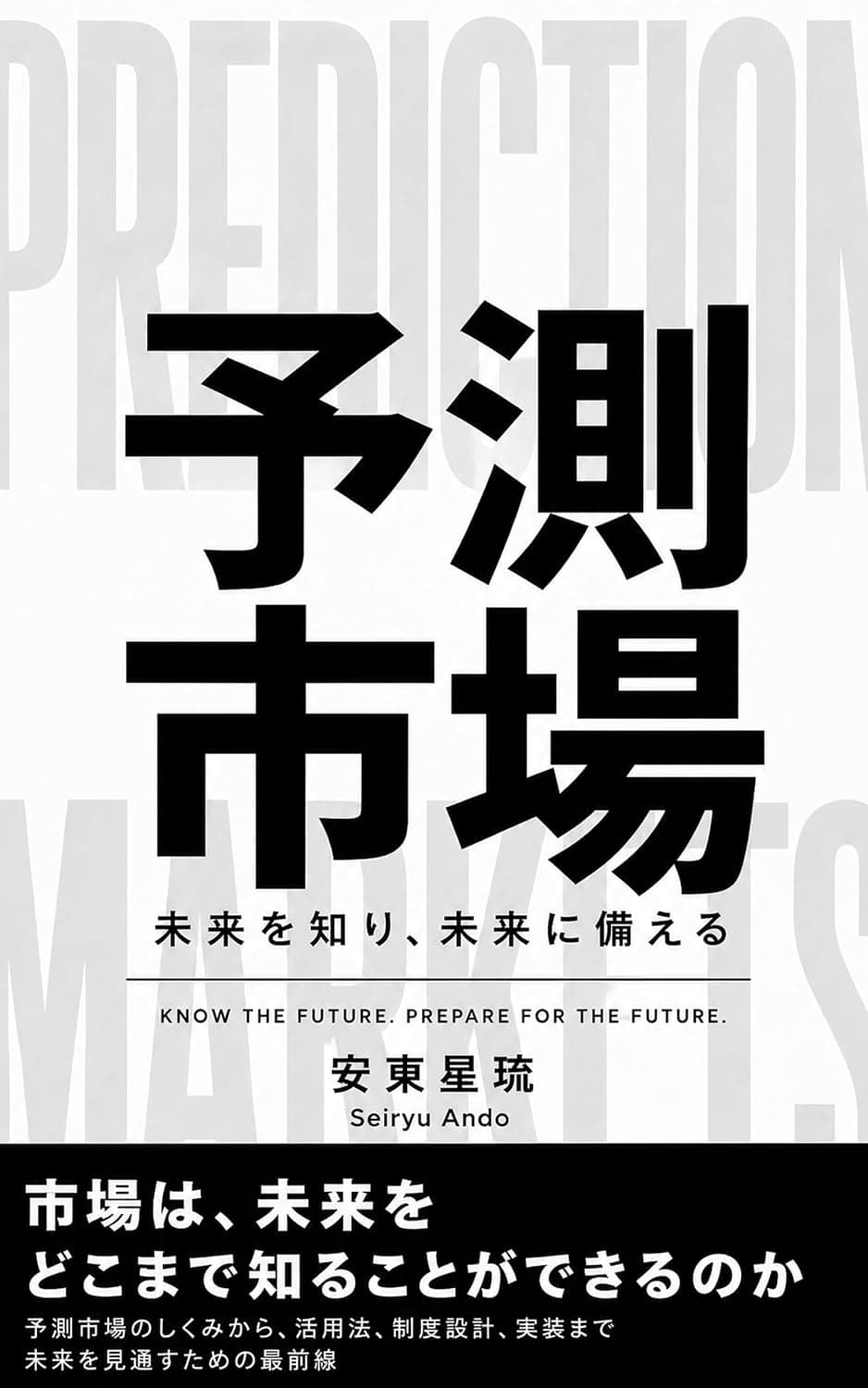
Book
Prediction Markets: Know the Future, Prepare for the Future
A Japanese-language book exploring prediction markets as tools for aggregating information and preparing for uncertainty.
Explore the bookGenerative AI training for business
Sales proposals. Hiring workflows. Everyday work.
Practice giving clear instructions, creating useful outputs, and checking the results. Take reusable prompts and working methods back to your team's everyday tasks.
Skills covered in training
Curriculum
Prompt design, documents and images, and checking outputs.
Research, proposals, spreadsheets, analysis and recruitment.
GPTs, document retrieval, workflows and evaluation.
Hands-on projects
Research, analyze, present and build a workflow. Practice connecting several tasks and taking an assignment through to a finished deliverable.
Related courseApplied business workflows
Work on a proposed service: define the questions, collect evidence and present a recommendation that a decision-maker can assess.
Example toolsChatGPT / PowerPoint or similar
Clarify the customer problem and decide what to investigate about the market, alternatives and implementation requirements.
Use AI to gather and organize information. Record sources and dates, build a comparison and separate facts from hypotheses.
Prepare slides covering the recommendation, evidence, implementation and next steps. Anticipate questions from the audience.
Training courses
Choose from three courses. We adapt the curriculum below to your team’s experience and business tasks, combining modules where appropriate.
Employees starting to use generative AI at work
Capabilities and limits, choosing models and features, confidential information, copyright and inaccurate outputs.
Separate a familiar task into work AI can support and decisions a person must make.
Objectives, context, input information, constraints and output formats. Follow-up questions and revision requests.
Try different instructions for the same writing task, compare the results and improve them.
Summarization, comparing sources, drafting, image understanding and generation, and checking file-based outputs.
Prepare meeting notes and questions from source documents, then verify them against the originals.
Working with Excel or CSV files, calculations, charts and verification. Applying the process to daily work.
Analyze an exercise dataset and prepare a report with charts and conclusions.
Reusable prompts, document and analysis outputs, and an output-review checklist
Sales, planning, marketing, recruitment and operations teams
Current steps, bottlenecks, input material, deliverables and decisions that need a person.
Map a team workflow and agree the assignment and review criteria.
Framing questions, public-source research, source checks, comparisons, outlines and presentations.
Research a market and alternatives, then create an evidence-based proposal and anticipated questions.
Choose from sales proposals, marketing tasks, recruitment and interviews, or recurring reports.
Complete a business deliverable using approved company material or fictional training data.
Instructor feedback, revisions, shared prompts and procedures, and measuring time and quality.
Compare revisions and document a procedure the team can reuse.
A business deliverable, reusable prompts and procedures, and a sheet for assessing the application
AI champions, process-improvement staff and internal development teams
Chat, agents and workflows. Inputs, processing, outputs, human review and access.
Define a limited prototype for internal questions or document preparation.
Roles, instructions, source documents, retrieval-augmented generation basics, document preparation and evidence.
Create an assistant that consults an operating manual.
Connect input, classification, retrieval and generation in Dify or a similar tool. Conditions and handoff to a person.
Prototype a process from incoming question classification to a draft answer.
Test questions, expected outputs, failure analysis, better instructions and sources, and update and sharing rules.
Test normal and exceptional cases, then present improvements and remaining operating considerations.
An assistant or workflow prototype, configuration and sources, an evaluation sheet and a draft operating procedure
Pricing is quoted individually. Duration, sessions, group size, tools, instructors and follow-up are agreed for each program.
Delivery & learning
We clarify the audience and business need, prepare the materials and tools, then combine instruction, practical work and feedback on the results.
Discuss the target departments, current AI use, tasks to improve, participant experience and preferred timing.
Define modules, exercises and outcomes alongside pricing, duration, group size and format. Select instructors for the content.
Confirm the required accounts and plans. Select materials, check what may be shared and prepare the exercise data.
Participants work on assignments after the instructor’s explanation and demonstration. They share their outputs and revise them with feedback.
Review use in actual work, including quality, time and remaining issues. Add further practice or improvement support as agreed.
The instructor explains the approach and key operations.
Participants use documents or data to create their own outputs.
Review evidence, business requirements and reproducibility.
Improve the procedure and plan how to use it in the team.
Post-training assignments and the availability, period and frequency of follow-up are agreed in the program before enrollment.
People & expertise
Instructors are selected for the training topic, participants, and expertise required. We confirm the instructor before the program begins.
Research and publications by our founder
Representative Director, Atlas Support Inc.
Seiryu works on generative AI in business and applied economics. His publications include a Japanese book on prediction markets and a working paper on the relationship between generative AI use and firm value.
Book
A Japanese-language book exploring prediction markets as tools for aggregating information and preparing for uncertainty.
Explore the bookDetails
We propose the content and delivery conditions based on your team's learning goals.
Pricing reflects participants, session count, exercise preparation, and the scope of follow-up.
Duration, session count, and group size are adjusted to participants' experience and the tasks involved.
We propose a format that suits the exercises, participants, and learning environment.
We consider tools such as ChatGPT and confirm the accounts and plans needed for the exercises in advance.
We adapt the content to participants’ experience. The AI & ChatGPT foundations course covers how the tools work, key precautions, basic operations, prompting, documents and data.
Yes. We agree what can be shared and use approved material or prepared samples. Information handling and the conditions of the chosen AI tools are reviewed in advance.
We choose tools such as ChatGPT based on your working environment and training goals. Required features, accounts, and plans are confirmed before the program.
Programs are individually quoted. We propose the duration and delivery conditions alongside pricing based on participants, tasks, session count, preparation, and follow-up.
Follow-up can include reviewing workplace trials, improving prompts and review steps, and organizing guidance for the team. Scope, duration, and session count are agreed for each program.
Instructors are selected for the topic, participants' experience, and expertise required. The instructor and program content are confirmed before delivery.
Start with your work
Tell us about the work and your current use of AI. We will propose a practical training approach for your team.